






Somewhere in the last decade, measurement stopped informing the work and became the work. Teams gather data to feel ready, not to decide.
Data tells you where your audience is, never what to build or why anyone should care. That gap between the number and the meaning is where brands win or lose.
The brands pulling ahead in data-driven branding don’t necessarily have more data or even better data. They know what to do with it. They use insight to sharpen a point of view, not sand it down to match everyone else’s. Data finds the room. Creative makes your audience remember you were in it.
Most teams do this backwards. They gather data first and hunt for a story in it—which can leave you with a deck full of charts and no decision. Start from the call you’re trying to make. Then pull only the data that could change your mind. Data doesn’t generate strategy. It pressure-tests it.
The teams that get this right make the data legible to people who aren’t fluent in it. A strategist and a designer should read the same number and land in the same place. That’s when data stops gatekeeping and starts moving the work.
We view data as a filter rather than simply a list of metrics. The data that matters is the data you’re willing to act on. NPS, engagement, lifetime value, and brand perception are all useful and easy to hide behind. Ask the harder question before you track anything: What would this number have to say for us to change course?
Focus on your brand goals with your internal team and decide together which data points will answer key business questions. Then work backward to understand the business problem you are trying to solve so you can determine which data points are needed to uncover the deeper picture behind it.
They don’t fail from a lack of data. They fail because data becomes a way to avoid the call. We call this analysis paralysis—decision avoidance at its finest. There’s always one more report to run, one more segment to cut. Meanwhile, the market moves, your competitors decide, and the window closes.
Know the question or challenge you’re solving for before you look at the data. Pick the two or three signals that track to your brand outcomes, and treat the rest of the data as context. A signal earns its status by predicting something—a behavior, a shift, a result.
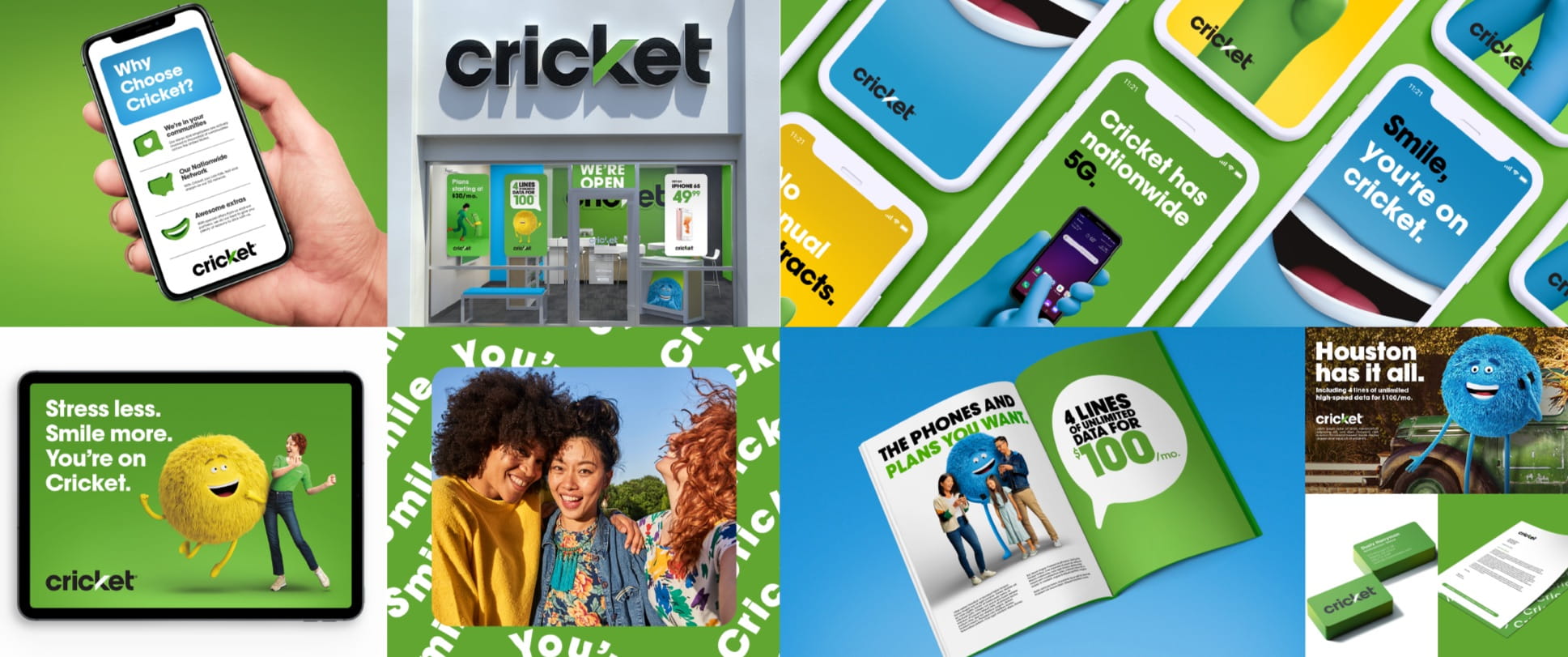
Activation is the moment data stops describing the world and starts changing it: the segment that reshapes a campaign, the friction point that redesigns an experience, the tension that becomes the creative idea. When we helped Cricket Wireless rebuild its brand experience, activation meant using our proprietary research method—Meaningful Experience Modeling™—to pressure-test every touchpoint against two questions: Does the audience care about this moment, and does it deliver on the brand? The ones that did both became Moments of Impact℠—bill forgiveness, a premium welcome for new customers, texting with a local associate. These were changes customers could really feel.
Everywhere the data stops—which is sooner than most admit. Data tells you what happened. It can’t tell you what it means or what to do about it. It’ll show you a message underperformed; it won’t tell you whether the message was wrong or the moment was. That gap between the number and the meaning is where brand building happens. The instinct to build something the data didn’t ask for is often what separates a brand that follows the market from one that sets it.
Alignment should be an intentional decision from the very start. Shared insight only shows up when teams answer to the same business outcome. In practice, that means putting analytics, strategy, and creative in the same room while the question is still being framed—not after the brief is written.
Behavior data is honest in a way surveys never are—it shows what people do, not what they say they’ll do. Watching how audiences move through your brand tells you what’s working.
But behavior data has one blind spot: It only knows the brand you already have, not the one you could become. It optimizes the current version of you. It never suggests the leap. Ground your identity in how people behave in real life, and then keep the judgment to build past what the data can see. Cricket had defined its audience the way most brands do: by demographics. The quantitative work told us that view was too flat to build on. So we layered “wireless personalities” on top of the media target—what people genuinely wanted from a carrier and why they chose one.
Decide what counts as proof before you act. The most common measurement failure is deciding what “worked” once the numbers are in. Name the metric and the threshold up front, when you have nothing to gain from moving the goalposts.
Brand recall, share of voice, acquisition cost, lifetime value—any can show real movement, but only against a baseline you set before the work went live. And give it honest time. Brand impact rarely shows up quickly, and the pressure to prove it early is exactly what kills the work that would have paid off. Measure like you mean it, then let it run.
Data-driven branding works when it’s the starting line.
The teams that get it use data to find the tension, then trust judgment to do something bold with it. They define proof before they act. They give the work time to land.
Your competitors have the same data you do. The same tools, the same benchmarks. What they don’t have is your point of view—the one thing that was ever going to set you apart, and the one thing the data can’t hand you.
Our services build brand systems, campaigns, and media strategies that turn insight into work that breaks through, scales consistently, and delivers on business outcomes. It’s the work we did for Cricket Wireless—taking a brand the prepaid category saw as low end and rebuilding it, touchpoint by touchpoint, into a value-by-choice provider people wanted to be with. If your product has outrun the story the market tells about it, that’s the gap we close. Let’s talk.
.jpg)
.jpg)