


When your brand features a robust portfolio of products, services and sub-brands, a clear brand structure is necessary to organize it all. A well-thought-out brand architecture defines the relationships between all of the brands, ensures consistency and clarity and strengthens the overall market positioning by determining where brands are independent and where they collaborate.
As your brand evolves, grows and acquires new brands, it begins to raise new questions about complexity in your brand structure. Brand architecture clarifies how everything ties together and simplifies this complexity. When you set this foundation, your internal teams know how to communicate, and your consumers know where to turn for what they need.
This guide highlights successful brand architecture frameworks, actionable methods for implementing an architecture plan and best practices for sustaining a framework that flexes the clarity you need.
Your brand architecture is the way in which your brand is structured and how your sub-brands work together to reinforce your larger brand. Just like the architecture of a building, your brand architecture determines how your brands are related, how they support each other and how they interact.
Your brand architecture may involve all of your brands being entirely dependent on each other or all of them being treated as practically separate entities. Having a thoughtful brand architecture builds a foundation for all your other efforts, ensuring internal alignment and informing your outward messaging.
Just like an organized office space, an organized brand architecture is just better for the brain when you know where everything is, what it does and where to find it when you need it—and it benefits your customers too. An organized brand architecture accomplishes the following:
If you find that your customers may lack clarity on all your offerings or your sub-brands are varying in performance, re-visiting your brand architecture is a good idea. Clear organization sets the foundation for a direction-oriented brand strategy, efficient marketing and unmistakable messaging.
There are multiple models you can use to build a brand architecture fit for your purpose. The following are the most common brand architecture examples.
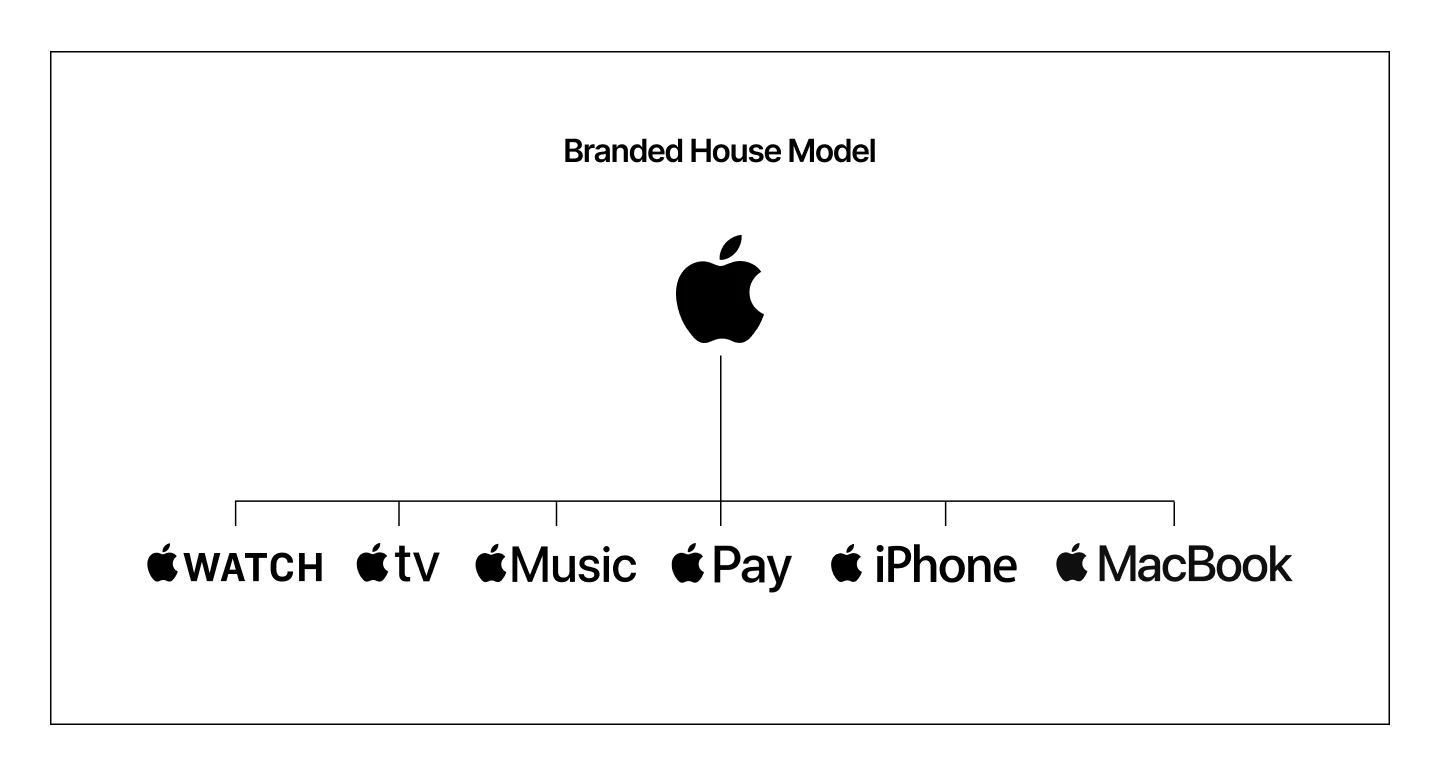
A monolithic, or branded house, model features a very prominent parent brand with all of its sub-brands sharing similar branding and being clearly tied to the parent. While each of the sub-brands has its own unique service or product offerings, they are all clearly a part of the branded house, both in name and in branding.
Common examples of the branded house approach:
In Apple’s case, the iPhone, iPad and Apple Watch are all strongly defined by their association with Apple as the parent brand. Branding across sub-brands is consistent, with all logos following a similar theme, making them all clearly and indisputably Apple products. The FedEx approach is similar, with the parent brand housing various extensions, like FedEx Express, FedEx Ground, FedEx Freight and beyond. Although the sub-brands offer unique services, they all share the identity of the master brand and its branding.
Advantages of the branded house model:
Disadvantages of the branded house model:

An endorsed brand model features a parent brand that oversees its independent sub-brands while still maintaining a clear relationship between all parts of the portfolio. Unlike a branded house approach, each of the brands has its own identity and autonomy in its marketing and messaging. However, unlike a pluralistic approach, each brand still has a close and visible association with the parent brand, with this association acting as the endorsement.
Common examples of an endorsed brand approach:
Marriott and Kellogg both act as parent brands that maintain a strong presence over their portfolio while still providing autonomy to their sub-brands. Frosted Flakes, Fruit Loops and Rice Krispies are all unique products with their own messaging, marketing and value, but they are endorsed by Kellogg as the parent brand. Anyone who enjoys one Kellogg’s cereal may be more inclined to try another.
Similarly, Marriott oversees the Courtyard, Fairfield, Residence Inn and other properties while keeping its name front and center to demonstrate that they are a part of the Marriott profile. Your rewards will work at all of these hotels, which is great for brand loyalty, but a different property may suit your fancy depending on the trip, which is great for reaching multiple audiences.
Advantages of an endorsed brand model:
Disadvantages of an endorsed brand model:
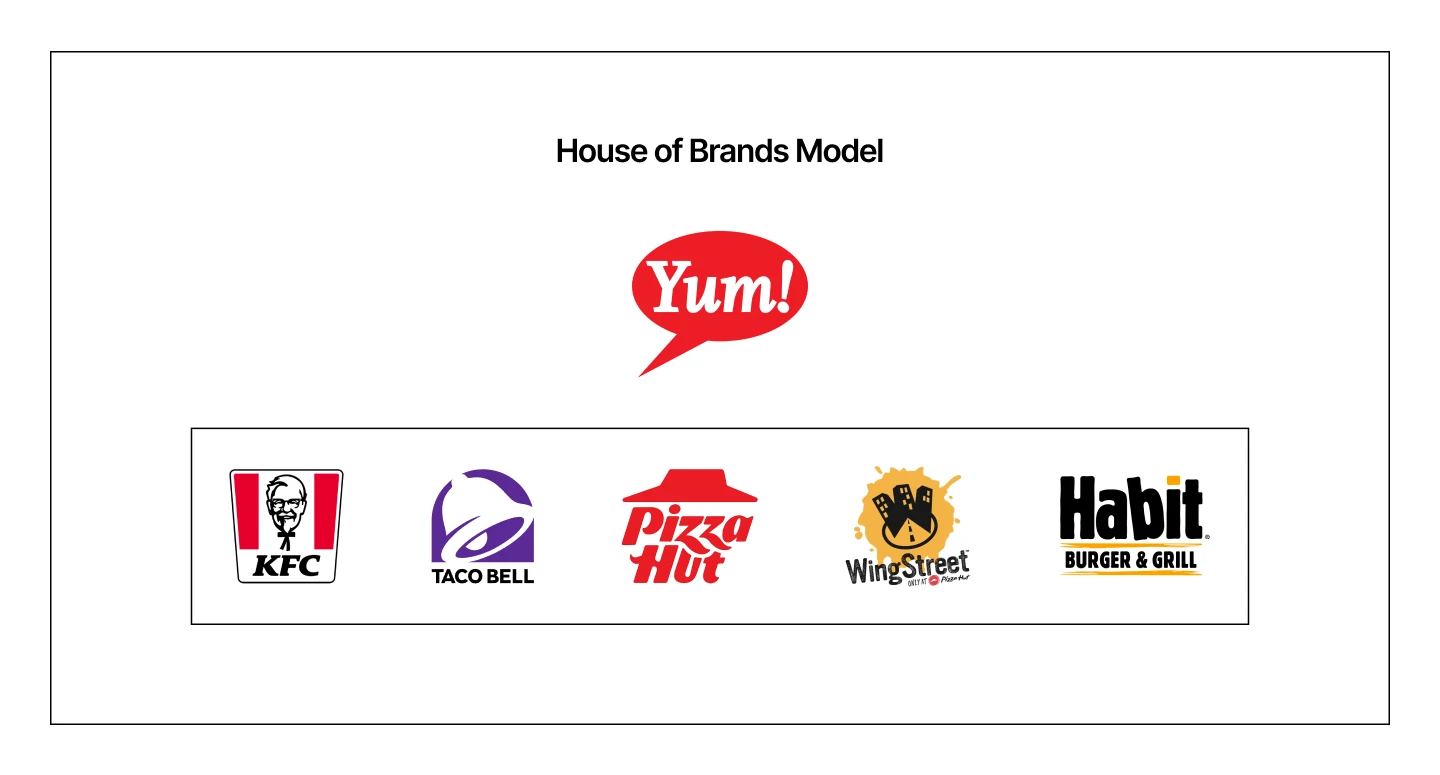
In a pluralistic approach, each sub-brand has its own character and profile, but they are still a part of and operated by a parent brand, which is often less visible. The parent brand serves an oversight role, while the sub-brands act as their own independent entities with their own identity, target audience and brand positioning.
Common examples of a house of brands model:
Yum Brands is hardly a household name, but its sub-brands—Taco Bell, Pizza Hut, KFC and others—are very well-known for their established specialties in the fast food market. Similarly, Procter & Gamble is not the face of many products, but it is the parent brand for a wide portfolio of sub-brands, including Dawn, Gillette and Oral-B, which are all unique product offerings in the umbrella.
Advantages of a pluralistic approach:
Disadvantages of a pluralistic approach:

A hybrid model combines a pluralistic and monolithic approach. While some sub-brands may share some visible connection to the parent brand, others may not and others may even act as their own parent brands for other services.
A hybrid approach allows brands to adapt to market demand and customer perception by using a varied architecture depending on the strategic goals of each sub-brand. For example, some sub-brands may benefit from operating independently with their own branding to maintain existing brand equity, while other service offerings may benefit from maintaining a strong branded connection to the parent brand.
The hybrid approach is often used in response to company acquisitions, growth or restructuring. This model allows an acquired brand to keep its branding, focus on its specialty and sustain brand equity while still being adopted by the parent and placed under an umbrella of other independent sub-brands.
Common examples of a hybrid model:
In 2015, Google restructured to become Alphabet, which now follows a hybrid approach, acting as a parent brand for others like Verily, Calico, Google and Nest. However, underneath Alphabet, Google follows a branded house model. For Google, most of its services follow the same nomenclature with Gmail, Google Calendar, Google Meet and so on. Still, services like Android and YouTube have a less visible tie to Google.
Advantages of a hybrid model:
Disadvantages of a hybrid model:
Building a successful brand architecture plan involves the steps below.
Perform a complete overhead analysis of all the brands and services in your portfolio. Carefully evaluate the strengths, weaknesses and market perception of each of your sub-brands: Which brands are performing well independently? Do you risk losing brand equity by combining or merging brands? Could your brands benefit from the support of a strong parent brand? How do your current brands fit into your company culture? These initial questions will help you narrow down the frameworks you should consider.
Your brand’s long-term goals are foundational to drawing your brand architecture blueprint and determining the structure necessary to reach them. Gather your stakeholders, from executives to your customer-facing team, to marinate on questions about your short and long-term goals, like:
Ultimately, determining the proper framework will boil down to this key decision: decide whether your goals align with simplification, consolidation, or expansion.
Once you understand the context in which your brand exists and operates, you can finally select the ideal framework. As you conduct your final review, consider these questions:
Once you’ve found alignment amongst your internal team, pinpoint the framework that provides the best fit for your objectives. Answers highlighting strong brand equity and a desire for brand independence might warrant a pluralistic architecture, or an interest in cross-promotion and strong oversight could suggest a monolithic approach, while a mix of answers could urge you toward a hybrid model.
Ensure that your branding and messaging are in careful alignment and reflect the architecture framework you’ve chosen. Your brand names, logos, voice and tone and communications should all reflect the model you implement.
If you implement the branded house approach, ensure that each of your brands is distinct enough to stand on its own. Whereas if you choose a pluralistic approach, be sure to create visual identities that reflect the service or product, but still clearly adhere to the standards of the parent brand.
You may even consider focus groups to understand how audiences perceive your various brands and the level of differentiation between them before you go to market. Once you have the details ironed out, create clear guidelines to support consistent application across all your channels.
Implementing and integrating your new or adjusted framework requires a careful approach to avoid confusion amongst your audience. When rolling out a complete brand restructure, consider a phased approach to ensure a smooth transition. Begin by sharing the vision and the necessary steps to reach it with your entire organization.
The heart of any effective branding strategy starts from the inside out. Before you pull the lever, ensure your internal teams are on the same page so that nothing gets muddy. Provide training on new naming conventions, messaging hierarchy and brand relationships to confirm that your team understands how they communicate with consumers and can be strong representatives of the brand.
Maintaining a brand architecture that propels you to your objectives and satisfies your stakeholders requires a firm commitment to finding and filling in the gaps. Ongoing communication with your internal executive team, customer-facing staff, target customers and market experts is crucial for achieving the ongoing clarity that all sides desire.
Engage these strategies and practices:
Any change to brand strategy must be closely followed by meticulous research and tracking to assess its effectiveness. Carefully analyzing your audience success and measuring impact will help you understand how your messaging lands with your consumers and whether it is sparking the growth you’re seeking.
Dive into these areas:
Your brand architecture will evolve over time. As you roll out new changes and offerings to grow your business, this evolution is natural. It may become worthwhile to combine brands, split brands, add endorsements, or refine naming conventions as you grow.
Continuing to gather and value feedback will ensure that this evolution is grounded in meaningful insights and is responsive to what works. Encourage feedback from both your internal teams and your customers to gather all perspectives of your brand architecture and maintain clarity.
A parent brand with multiple sub-brands needs clarity to streamline the effectiveness of all its messaging, brand-building and product offerings. Sticking to a strategic brand architecture plan will enable you to develop a brand architecture framework that fits your goals while driving upward growth and sustainable success.
VSA brings structure, clarity and logic to brand architecture frameworks, assisting brands in establishing a portfolio structure that successfully takes them to the market. From there, we’ve helped bring these brands to life through thoughtful brand consulting. Between our proprietary approach to audience research and our decades of experience in developing brand creatives, we deliver complete clarity to brands and their audiences while setting the groundwork for ambitious growth.
Let’s start building—contact VSA to develop a brand architecture framework that empowers you to thrive in your market.